
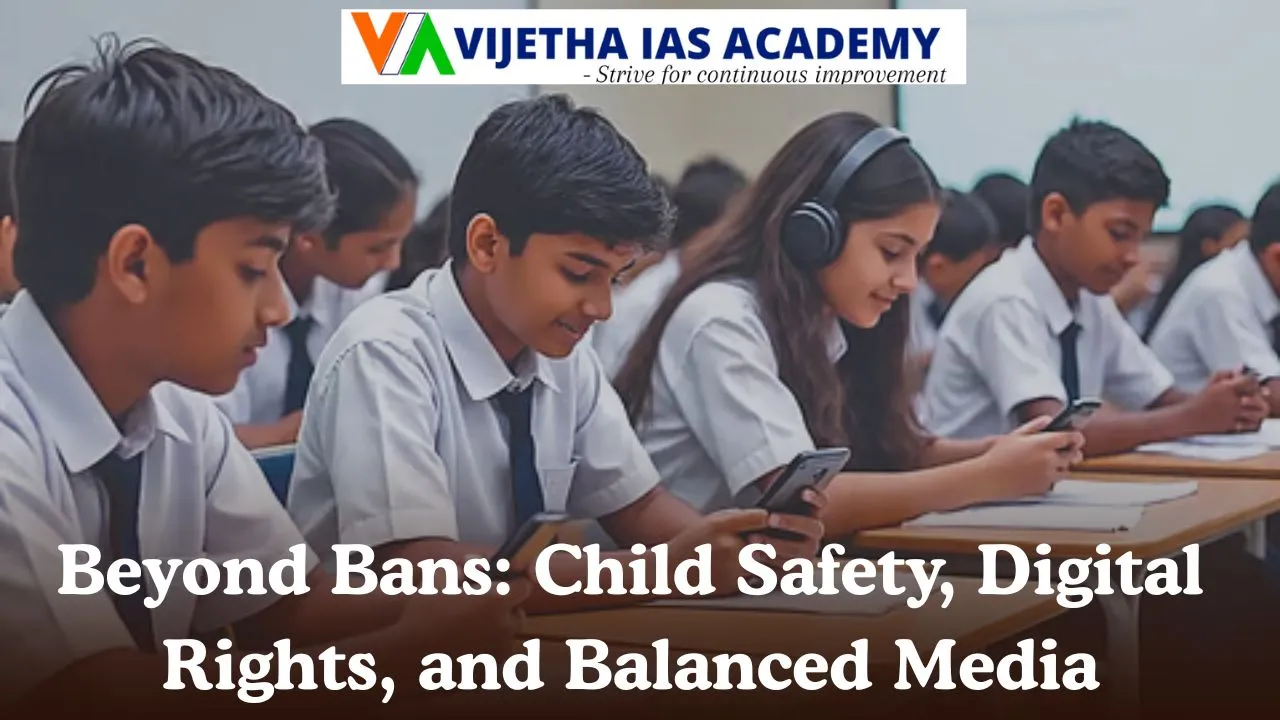
Beyond Bans: Child Safety, Digital Rights, and Balanced Media Ecology
Introduction
In the digital age, social media has become an inseparable part of everyday life, especially for young people. However, rising concerns about screen addiction, cyberbullying, mental health issues, and exposure to harmful content have triggered intense debates on whether social media should be banned for children. A tragic suicide incident involving teenagers in Ghaziabad further intensified demands for strict restrictions. Yet, experts argue that such bans oversimplify a complex socio-technological issue that involves mental health, family environments, platform design, and digital inequalities.
This case study highlights the need for a balanced approach that protects children while safeguarding their digital rights.
The Core Policy Debate
The central issue is whether restrictive bans or comprehensive regulatory frameworks can better address children’s mental health concerns. Evidence shows that excessive social media use is linked with anxiety, depression, and body-image issues among adolescents. However, this relationship is influenced by social, economic, and psychological factors, making blanket bans ineffective.
Key Challenges with Social Media Bans
1. Implementation Difficulties
Age-verification systems are technically weak and easily bypassed through VPNs or false identification. As a result, bans may push children toward unregulated or encrypted platforms, increasing exposure to harmful content.
2. Risk of Mass Surveillance
Strict identity verification may link social media accounts with government IDs, raising concerns about privacy and mass surveillance.
3. Ignoring Social Benefits
Social media acts as a support system for:
- Rural and marginalised youth
- Differently-abled children
- LGBTQ+ adolescents
Removing access may reduce opportunities for social support, education, and information sharing.
4. Gendered Digital Inequality
Women and girls already have lower internet access in India. A ban may reinforce patriarchal restrictions, leading families to deny digital devices to girls, widening the gender digital divide.
5. Democratic Deficit in Policymaking
Policies affecting young users are often designed without consulting them, reducing effectiveness and legitimacy.
Structural Causes of the Problem
The issue is not just about children’s behaviour but also about the structure of digital platforms. Major causes include:
- Algorithms designed to maximise engagement and advertising revenue.
- Weak regulatory frameworks for Big Tech.
- Lack of child-specific safety standards.
- Limited India-specific research on digital behaviour and mental health.
Policy Alternatives: Building a Healthy Media Ecology
1. Regulatory Measures
- Introduce “duty of care” obligations for platforms.
- Strengthen digital competition laws.
- Establish an independent expert regulator.
2. Research and Evidence-Based Policy
- Conduct national surveys and longitudinal studies.
- Include children and adolescents in policymaking.
3. Platform Accountability
- Transparent algorithmic standards.
- Mandatory child-safety safeguards.
- Financial penalties for safety failures.
4. Broader Digital Governance
Regulations should also address AI chatbots and emerging technologies, which may create new mental health and misinformation risks.
Governance Lessons
This case offers important insights:
- Complex social problems need multi-dimensional solutions, not symbolic bans.
- Digital governance must balance protection, rights, privacy, and innovation.
- Evidence-based policymaking improves outcomes.
- Regulation must address platform business models, not just user behaviour.
Conclusion
A blanket social media ban may appear decisive, but it does not address the structural causes of digital harm. A healthier digital ecosystem requires platform accountability, regulatory oversight, public research, and digital literacy. Such a balanced approach can protect children while preserving their digital rights and opportunities.