
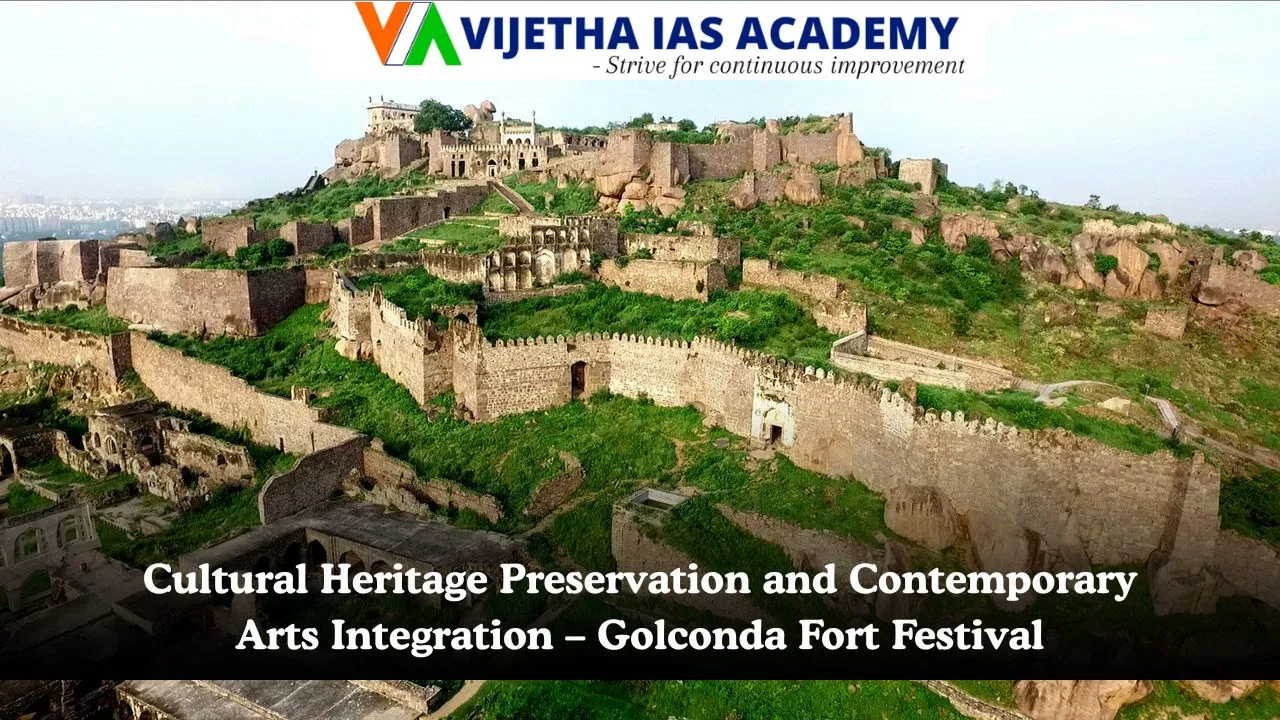
Cultural Heritage Preservation and Contemporary Arts Integration – Golconda Fort Festival
Introduction
On December 12, 2025, Hyderabad hosted the Golconda Fort Festival, a one-day cultural event blending heritage architecture, folk traditions, classical music and contemporary performance. Organised by Crraft Of Art with the Telangana Government, the event transformed Golconda Fort from a static monument into a living cultural space.
This case highlights how culture remains dynamic and socially relevant, aligning with core principles of Social-Cultural Anthropology.
Heritage as a Living Space
Instead of treating monuments as frozen relics, the festival positioned Golconda Fort as a space for active cultural participation. This approach:
- Enhanced public engagement with heritage
- Promoted intangible cultural traditions
- Strengthened place-based identity
Anthropologically, this reflects the idea that culture survives through practice, performance and community involvement.
Folk Traditions and Community Memory
The festival showcased rich Telangana folk forms such as:
- Gussadi (Gond tribal dance)
- Kommu Koya
- Oggu Katha
- Burra Katha
- Perini Shivathandavam
These traditions preserve oral history, collective memory and social values, aligning with UNESCO’s concept of intangible cultural heritage. Performances by Purulia Chhau artists also added an inter-regional cultural dialogue.
Classical–Contemporary Fusion
The evening highlight, the Drums of India concert, led by Ustad Fazal Qureshi, blended folk rhythms, classical percussion and contemporary styles. Such fusion reflects India’s cultural pluralism, proving that tradition and modernity are not opposites but coexist dynamically.
Cultural Governance and Development
Anthropologically, the festival reflects new governance trends:
- Adaptive reuse of heritage spaces
- Public–private collaboration
- Cultural tourism as economic strategy
It aligns with initiatives like Ek Bharat Shreshtha Bharat and promotes culture as a tool of soft power and urban identity.
Conclusion
The Golconda Fort Festival demonstrates how heritage-led cultural revitalisation can keep traditions relevant, participatory and economically viable. Culture survives not by preservation alone, but by continuous reinterpretation.