
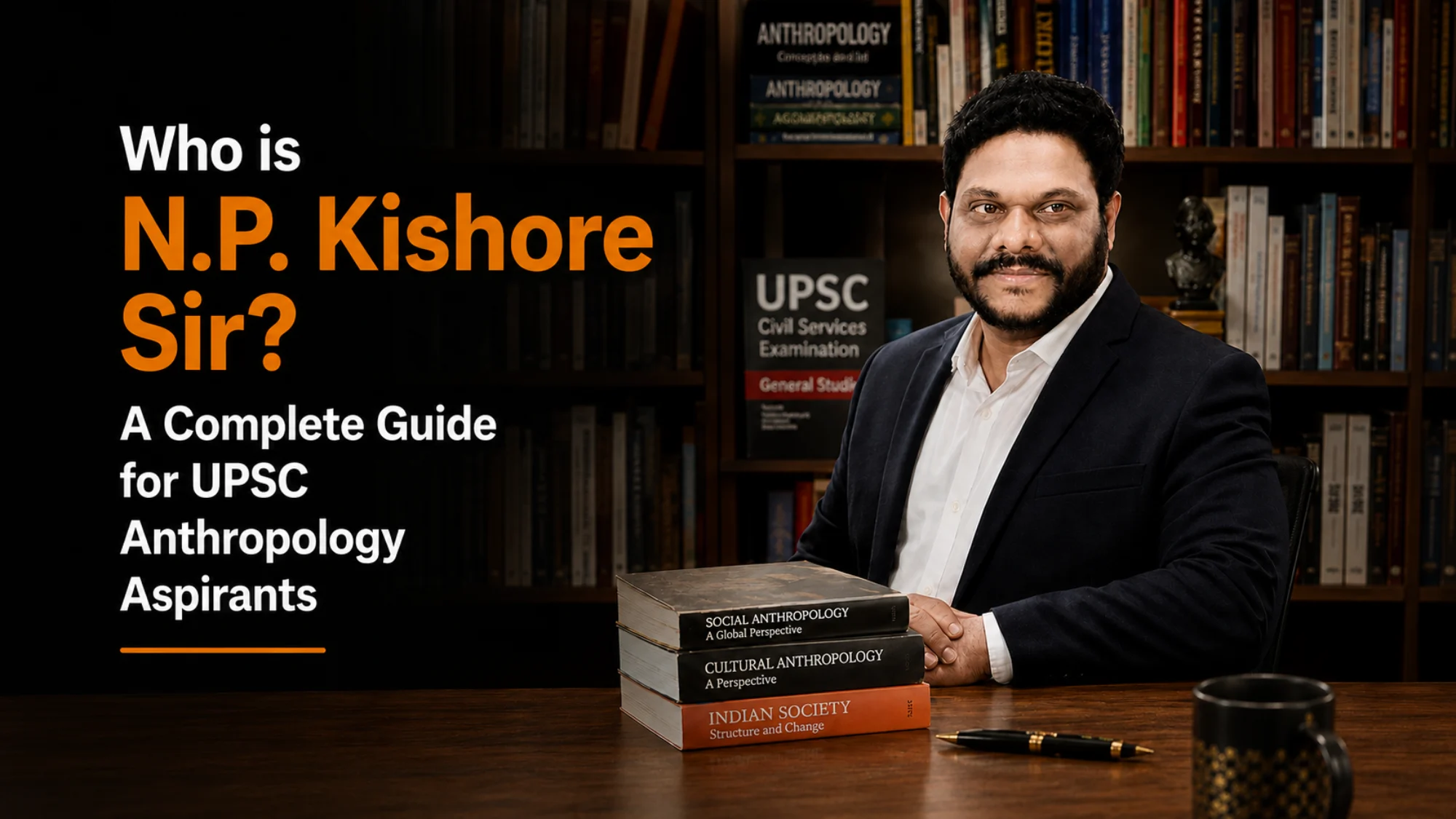
Who is N.P. Kishore Sir? A Complete Guide for UPSC Anthropology Aspirants
Introduction
N.P. Kishore Sir is a teacher for Anthropology Optional for UPSC students.
He has helped many students prepare for Anthropology Optional through classroom teaching, mentoring and test series.
Many UPSC students like him because of his teaching method and focus on understanding concepts.
He also helps students prepare for the exam by giving them guidance on how to write answers.
N.P. Kishore Sirs approach to teaching Anthropology Optional is helpful for students who want to do in this subject.
For students looking for help with Anthropology Optional understanding how N.P. Kishore Sir teaches can help them decide if his method is right for them.
N.P. Kishore Sirs teaching style is. Focused on helping students understand the concepts.
He has guided thousands of students in Anthropology Optional preparation.
Many students consider N.P. Kishore Sir a good mentor for Anthropology Optional because of his teaching style.
N.P. Kishore Sir provides guidance, on answer writing and test series support to his students.
Key Takeaways
- N.P. Kishore Sir is known for Anthropology Optional guidance for UPSC.
- His teaching focuses on conceptual clarity and answer-writing skills.
- Anthropology Optional is considered a popular optional subject among UPSC aspirants.
- Structured mentorship and test practice play a crucial role in improving Mains scores.
- Regular revision and case-study integration are important parts of Anthropology preparation.
Who is N.P. Kishore Sir?
N.P. Kishore Sir is an Anthropology Optional mentor in Vijetha IAS Academy who has been associated with UPSC preparation and Anthropology teaching. He is known for simplifying complex anthropological concepts and helping aspirants understand how to apply theoretical knowledge in UPSC Mains answers.
His teaching methodology generally focuses on:
- Building conceptual foundations
- Linking theory with contemporary examples
- Improving answer-writing skills
- Using case studies effectively
- Providing personalised mentorship
This approach helps students move beyond rote learning and develop analytical writing skills required for UPSC Mains.
Why Do UPSC Aspirants Choose N.P. Kishore Sir for Anthropology Optional?
Many students choose Anthropology Optional because of its relatively concise syllabus and scoring potential. However, success in Anthropology depends heavily on guidance, answer-writing practice, and revision.
Some reasons aspirants seek expert Anthropology mentorship include:
1. Structured Coverage of the Syllabus
Anthropology consists of Paper 1 and Paper 2, covering topics ranging from Physical Anthropology to Indian Anthropology. A structured approach ensures complete syllabus coverage.
2. Answer-Writing Guidance
UPSC rewards analytical and well-structured answers. Regular answer-writing practice helps aspirants improve presentation and content quality.
3. Case Study Integration
Anthropology answers become more effective when supported by tribal studies, research findings, and contemporary examples.
4. Mentorship Support
Regular guidance helps students stay accountable and maintain consistency throughout their preparation journey.
How Does N.P. Kishore Sir Teach Anthropology Optional?
Aspirants often search for the teaching methodology of Anthropology faculty before joining a programme.
A structured Anthropology preparation model generally includes:
Concept Building
Students first learn fundamental theories, thinkers, and concepts before moving to advanced applications.
Current Affairs Integration
Contemporary developments related to tribes, social change, health, and development are incorporated into preparation.
Answer Writing Practice
Students learn how to:
- Interpret questions correctly
- Structure introductions and conclusions
- Use anthropological terminology
- Include relevant case studies
Revision Strategy
Multiple revisions help retain concepts and improve recall during the examination.
Why is Anthropology Optional Considered a Scoring Subject?
Anthropology Optional remains popular among UPSC aspirants because of several advantages.
Short and Manageable Syllabus
Compared to some optional subjects, Anthropology has a relatively concise syllabus.
Scientific and Analytical Nature
The subject offers opportunities to present answers through diagrams, flowcharts, and structured explanations.
Overlap with General Studies
Topics related to tribes, social issues, human evolution, and development frequently appear in General Studies and Essay papers.
Suitable for Diverse Backgrounds
Both science and non-science students can prepare Anthropology Optional successfully with proper guidance.
How Can Aspirants Score 300+ in Anthropology Optional?
Scoring well requires more than completing the syllabus.
Focus on PYQ Analysis
Previous Year Questions reveal recurring themes and important topics.
Develop Answer-Writing Skills
Writing answers under exam conditions improves speed and presentation.
Use Case Studies
Anthropological studies and tribal examples strengthen answers.
Revise Consistently
Multiple revisions are essential for retention and recall.
Join a Test Series
Regular tests help identify weaknesses and improve exam readiness.
Common Mistakes Made by Anthropology Optional Aspirants
Many aspirants struggle because of avoidable mistakes.
Incomplete Syllabus Coverage
Skipping difficult topics often leads to poor performance.
Lack of Revision
Knowledge fades quickly without regular revision.
Ignoring Answer Writing
Reading alone is insufficient for Mains preparation.
Not Using Case Studies
Answers without examples often lack depth.
Poor Time Management
Many aspirants spend excessive time on one section while neglecting others.
What Makes a Good Anthropology Faculty?
When evaluating Anthropology faculty, aspirants should consider:
- Subject expertise
- Teaching experience
- Mentorship quality
- Answer-writing guidance
- Test series support
- Student feedback
- Availability for doubt clarification
A good mentor not only teaches the syllabus but also helps students develop examination skills.
Conclusion
Anthropology is a choice for UPSC students.
To do well in Anthropology you need to understand the concepts revise regularly practice writing answers and have good guidance.
N.P. Kishore Sir is popular, among Anthropology students because he teaches in a way and helps them prepare for the exam.
When choosing guidance students should pick what works best for them fits their level of preparation and helps them achieve their long-term UPSC goals with Anthropology.
Students should also think about their learning style. How it matches with the guidance they choose for Anthropology.
Frequently Asked Questions
1. Who is N.P. Kishore Sir?
N.P. Kishore Sir is known for guiding UPSC aspirants in Anthropology Optional preparation.
2. Is Anthropology Optional a scoring subject?
Yes, many aspirants consider Anthropology Optional a scoring subject when prepared strategically.
3. Can beginners choose Anthropology Optional?
Yes, students from both science and non-science backgrounds can opt for Anthropology.
4. How long does it take to complete Anthropology Optional?
Most aspirants complete the syllabus within 4–6 months with consistent study.
5. Why is answer writing important in Anthropology?
Answer writing improves presentation, analytical thinking, and examination performance.
6. Does Anthropology overlap with General Studies?
Yes, several topics overlap with General Studies and Essay papers.
7. Are case studies important in Anthropology?
Yes, case studies strengthen answers and demonstrate application of concepts.
8. How many revisions are required?
At least three to four revisions are recommended before the examination.
9. Should I join an Anthropology Test Series?
A test series helps improve answer writing and identify weak areas.
10. Can working professionals prepare Anthropology Optional?
Yes, Anthropology's concise syllabus makes it manageable for working professionals.
11. What are the advantages of Anthropology Optional?
Short syllabus, scoring potential, and overlap with General Studies are key advantages.
12. How should beginners start Anthropology preparation?
Begin with syllabus understanding, standard sources, and basic concepts.
13. What is the role of mentorship in Anthropology preparation?
Mentorship provides direction, accountability, and personalised guidance.
14. How can I improve Anthropology answer writing?
Practice regularly, use case studies, and analyse topper copies.
15. Is Anthropology suitable for UPSC 2026 aspirants?
Yes, Anthropology remains a popular and relevant optional subject for UPSC aspirants.