
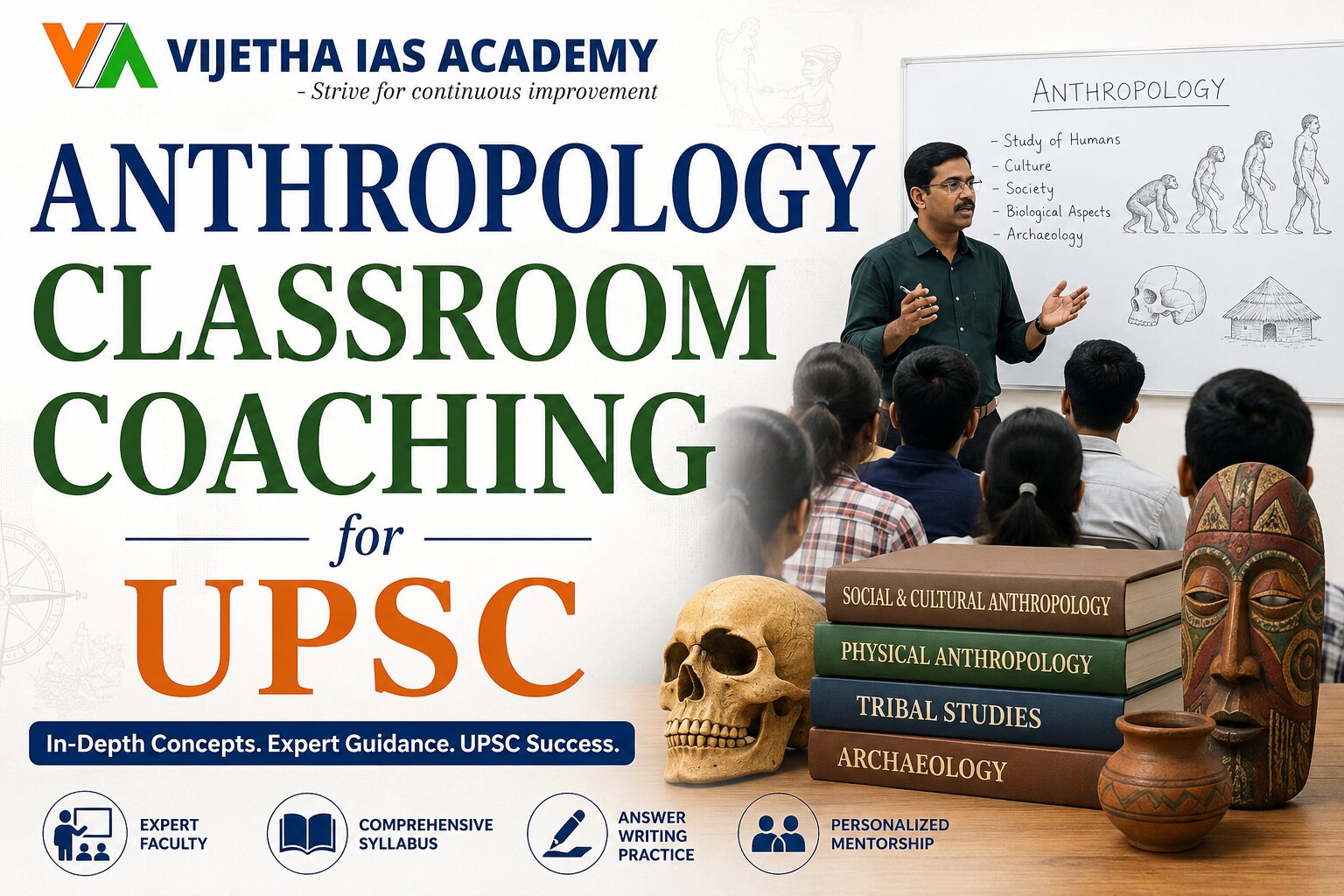
Anthropology Classroom Coaching for UPSC: Complete Guide to Structured Preparation and Success
Preparing for the UPSC Civil Services Examination is one of the most challenging academic journeys in India. While General Studies forms the backbone of preparation, the optional subject often becomes the deciding factor in securing a top rank. Among all optional subjects, Anthropology Optional has consistently gained popularity because of its concise syllabus, scientific approach, scoring potential, and relevance to contemporary social issues.
However, success in Anthropology requires more than just reading books. Aspirants need conceptual clarity, structured guidance, regular answer-writing practice, updated notes, and mentorship. This is where Anthropology Classroom Coaching plays a crucial role.
In this comprehensive guide, we will explore the benefits of Anthropology classroom coaching, how it differs from self-study, the importance of answer writing, and why a well-structured Anthropology course UPSC program can significantly improve your chances of success.
What is Anthropology Optional in UPSC?
Anthropology is the scientific study of humans, their evolution, biological characteristics, cultures, societies, and development. The UPSC Anthropology Optional syllabus is divided into two papers:
Paper I
- Meaning and Scope of Anthropology
- Human Evolution
- Genetics
- Primatology
- Human Growth and Development
- Social and Cultural Anthropology
- Marriage, Family, and Kinship
- Religion and Political Organization
Paper II
- Indian Anthropology
- Tribal Communities
- Demographic Profile of India
- Caste System
- Tribal Development
- Constitutional Safeguards
- Contemporary Tribal Issues
The subject is known for its balanced combination of science and social sciences, making it suitable for aspirants from all academic backgrounds.
Why Anthropology Optional is a Popular Choice Among UPSC Aspirants
Many UPSC toppers have chosen Anthropology because of several advantages:
1. Compact Syllabus
Compared to many optional subjects, Anthropology has a relatively concise syllabus that can be completed within a reasonable timeframe.
2. High Scoring Potential
The use of diagrams, flowcharts, anthropological thinkers, and scientific concepts often helps students score better.
3. Overlap with General Studies
Several topics overlap with:
- GS Paper I (Society)
- GS Paper II (Social Justice)
- GS Paper III (Science & Technology)
- Essay Paper
- Ethics
4. Suitable for All Educational Backgrounds
Whether you are from engineering, medicine, commerce, or humanities, Anthropology can be mastered with the right guidance.
Why Anthropology Classroom Coaching Matters
Many aspirants begin with self-study but struggle with:
- Understanding complex concepts
- Making effective notes
- Answer presentation
- Revision planning
- Test practice
A structured classroom coaching program helps overcome these challenges.
Benefits of Anthropology Classroom Coaching
Expert Guidance
Experienced faculty simplify difficult concepts and explain UPSC expectations.
Structured Learning
A classroom program follows a systematic schedule that ensures syllabus completion on time.
Regular Interaction
Students can ask doubts, participate in discussions, and improve conceptual understanding.
Accountability
Classroom coaching creates discipline and consistency in preparation.
Continuous Evaluation
Tests and answer-writing sessions help identify strengths and weaknesses.
Anthropology Classroom Program at VIJETHA IAS ACADEMY
A well-designed classroom program should focus on concept building, revision, and answer writing.
Key Features
Comprehensive coverage of UPSC Anthropology syllabus
Concept-based teaching methodology
Updated study material
Current affairs integration
Weekly assessments
Answer-writing sessions
Personalized mentorship
The objective is not just syllabus completion but also helping students develop the analytical skills required for UPSC Mains.
Learn Under the Guidance of N.P. Kishore Sir
One of the most important aspects of choosing a coaching program is the quality of mentorship.
Why Students Trust N.P. Kishore Sir
N.P. Kishore Sir is known for his:
- Concept-oriented teaching approach
- Simplified explanations
- Focus on UPSC requirements
- Practical answer-writing techniques
- Student-centric mentoring
His guidance helps students understand how to convert theoretical knowledge into high-scoring UPSC answers.
Teaching Methodology
The classroom sessions focus on:
- Concept clarity
- Diagram-based learning
- Previous year question analysis
- Case studies
- Current affairs integration
- Revision strategies
This approach ensures that students build a strong foundation while developing examination-oriented skills.
Anthropology Online Program for UPSC Aspirants
Not every aspirant can attend physical classes. Working professionals and students from different cities often require flexible learning options.
An effective Anthropology course UPSC should include a comprehensive online program.
Advantages of Online Learning
Learn from Anywhere
Students can attend classes regardless of their location.
Recorded Sessions
Missed classes can be revisited anytime.
Flexible Schedule
Online programs allow aspirants to manage preparation alongside college or employment.
Digital Study Material
Students receive notes, assignments, and tests in digital format.
Live Doubt Sessions
Interactive sessions ensure continuous learning and doubt resolution.
A quality online program should provide the same academic rigor as classroom coaching.
Recommended Daily Schedule for Anthropology Preparation
Consistency is the key to UPSC success.
Sample Daily Schedule
|
|
|
|
|
|
|
|
|
|
|
|
|
|
|
|
|
|
|
|
|
|
|
|
This schedule ensures balanced preparation, revision, and answer-writing practice.
Importance of Quality Notes in Anthropology Optional
One of the biggest challenges in UPSC preparation is managing multiple sources.
Well-prepared notes help students:
- Save revision time
- Consolidate information
- Improve retention
- Prepare for tests effectively
- Features of Good Anthropology Notes
- Comprehensive Coverage
Every topic should be covered according to the UPSC syllabus.
Diagram Integration
Anthropology answers become more impactful with:
- Human evolution diagrams
- Skull classification charts
- Genetic illustrations
- Tribal maps
- Current Affairs Linkage
Updated tribal issues and government initiatives should be incorporated.
Revision-Friendly Format
Notes should be concise and easy to revise multiple times.
Answer Writing: The Game Changer in Anthropology Optional
Completing the syllabus alone is not enough.
Many students know the content but fail to score because they lack answer-writing skills.
Why Answer Writing is Important
UPSC evaluates:
- Conceptual clarity
- Presentation
- Structure
- Relevance
- Examples
- Diagrams
Effective Anthropology Answer Structure
Introduction
Define the concept clearly.
Main Body
- Explain the topic
- Use anthropological theories
- Add examples
- Include diagrams
- Conclusion
Provide a balanced and analytical ending.
- Benefits of Regular Answer Writing
- Better time management
- Improved presentation
- Higher retention
- Increased confidence
- Enhanced analytical thinking
Regular practice is one of the strongest predictors of success in Anthropology Optional.
Student Testimonials
Rakesh Kumar, UPSC Aspirant
The classroom coaching helped me understand Anthropology from the basics. The notes and answer-writing sessions were extremely useful.
Priya Sharma, UPSC Candidate
The guidance of N.P. Kishore Sir helped me improve my answer presentation and confidence. The structured classes kept me disciplined.
Anjali Verma, Anthropology Student
The online program gave me flexibility while maintaining quality learning. The recorded lectures and study material were excellent.
How to Choose the Right Anthropology Course UPSC Program
Before joining any coaching program, evaluate the following:
Faculty Expertise
The quality of mentorship significantly affects learning outcomes.
Comprehensive Coverage
The syllabus should be covered completely and systematically.
Study Material
Updated notes are essential for effective revision.
Answer Writing Support
Regular evaluation and feedback are crucial.
Mentorship
Personalized guidance helps students stay focused and motivated.
Test Series
Mock tests help students assess preparation levels and improve performance.
Frequently Asked Questions (FAQs)
Is Anthropology Optional good for UPSC?
Yes. Anthropology is considered one of the most scoring optional subjects because of its concise syllabus, scientific approach, and overlap with General Studies.
Can non-science students choose Anthropology?
Absolutely. Students from engineering, commerce, humanities, and medical backgrounds have successfully cleared UPSC with Anthropology Optional.
Is classroom coaching necessary for Anthropology Optional?
While self-study is possible, classroom coaching provides structured guidance, expert mentorship, answer-writing practice, and systematic preparation.
How long does it take to complete Anthropology Optional?
With proper coaching and consistent study, most aspirants can complete the syllabus within four to six months.
What is the importance of answer writing in Anthropology?
Answer writing improves presentation, time management, conceptual clarity, and scoring potential in UPSC Mains.
Who teaches Anthropology at VIJETHA IAS ACADEMY?
The Anthropology program is guided by N.P. Kishore Sir, known for his conceptual teaching methodology and UPSC-focused preparation strategy.
Recommended blog by vijetha ias academy
BEST ANTHROPOLOGY OPTIONAL COACHING IN DELHI FOR UPSC 2027
Best Anthropology Optional Coaching in Delhi for UPSC 2027 – Complete Guide
Conclusion
Choosing the right optional subject and the right mentorship can significantly influence your UPSC journey. Anthropology Classroom Coaching offers a structured path to mastering the syllabus, improving answer-writing skills, and building confidence for the examination. Whether you prefer a classroom environment or a flexible online learning format, a comprehensive Anthropology course UPSC program can help you stay ahead of the competition through expert guidance, quality notes, regular tests, and continuous mentorship.