
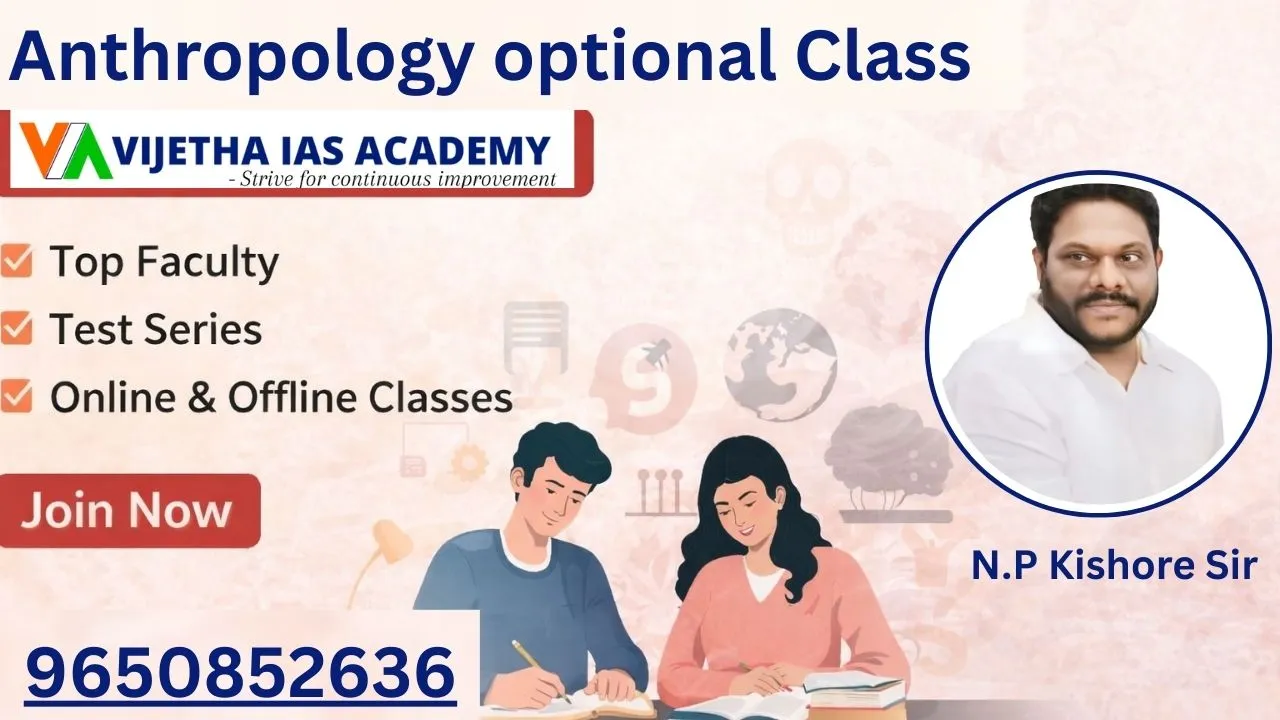
Anthropology Optional Class for UPSC – Vijetha IAS Academy
The Union Public Service Commission (UPSC) Civil Services Examination is one of the most coveted examinations in the country. The Examination is held in three stages: Prelims, Mains, and Interview. In the Mains exam, aspirants are given a choice to pick an optional subject; Anthropology is a prominent and highly popular subject among the 47 optional subjects available.
Anthropology has emerged as a preferred optional for students from every stream and is now widely chosen by aspirants enrolling in an anthropology optional class for UPSC preparation. The Anthropology optional syllabus for UPSC (Paper I) comprises the meaning and scope of Anthropology, its relationship with other disciplines, and the evolution of society, culture, and people. Topics such as Marriage, Family and Kinship receive significant emphasis in Paper I. Economic and political organisation, and religion also form core areas of the syllabus.
UPSC Paper II focuses on the application of anthropological theory to the Indian context. It includes anthropological perspectives on Indian society, the identity and organisation of tribes, and how anthropology helps us understand contemporary social issues in India.
HOW VIJETHA IAS ACADEMY PROVIDES THE BEST COACHING FOR ANTHROPOLOGY OPTIONAL (UPSC)
Vijetha IAS Academy is widely recognised for its anthropology optional class that focuses on concept clarity, answer writing and consistent mentorship.
Vijetha IAS Academy offers a structured, student-centred Anthropology optional programme designed specifically for UPSC aspirants. Our anthropology optional coaching is built around clarity of concepts, regular practice, and personalised feedback, making it suitable for both beginners and repeaters.
Key features of Vijetha’s Anthropology programme:
- Experienced & dedicated faculty: Our faculty member N.P Kishore Sir come with strong academic and teaching backgrounds in Anthropology and UPSC preparation. They combine academic rigour with practical answer-writing strategies.
- Comprehensive test series: A dedicated Mains Test Series prepared by subject-matter experts that mimics UPSC pattern and difficulty.
- Small batch size: Batches are intentionally kept concise (around 40–50 students) to ensure better interaction between faculty and aspirants and closer mentorship.
- Mains answer-writing programme: Regular answer-writing exercises with detailed evaluation and feedback on content structure, presentation, and exam technique.
- Current affairs integration: Faculty guide students on how to weave relevant current affairs into Anthropology answers to increase relevance and marks.
Our classroom + mentorship approach ensures that students not only learn theory but also practise and internalise the art of answering UPSC mains questions with precision and depth.
BEST TEACHER & FACULTY SUPPORT FOR ANTHROPOLOGY OPTIONAL
Vijetha IAS Academy’s Anthropology faculty are experienced educators and researchers who have guided numerous aspirants for the Civil Services Examination. They maintain a healthy balance between theoretical depth and answer-focused coaching. Faculty regularly participate in academic workshops and keep the course updated with the latest trends in UPSC question framing and expectations.
Paper I and Paper II of anthropology optional UPSC through structured teaching, regular testing and expert guidance.
Anthropology remains one of the most strategic and high-scoring optional choices for UPSC aspirants. Vijetha IAS Academy combines clear conceptual teaching, a rigorous test series, focused mentorship, and flexible delivery modes to help aspirants achieve their best scores in the Mains.
For batch dates, fee confirmation, faculty profiles, and detailed course brochures, please contact Vijetha IAS Academy through the official website or call the admissions desk. Our team will share the exact batch schedule (including upcoming 60‑day mentorship / test-series options) and help you pick the programme that matches your preparation stage.
Why Choose Vijetha IAS for Anthropology Optional?
|
|
|
|
|
|
|
|
|
|
|
|
|
|
|
|
|
|
|
|
|
|
|
|
|
|
|
|
|
|
|
|
|
|
|
|
|
|
|
|
|
|
|
|
|