
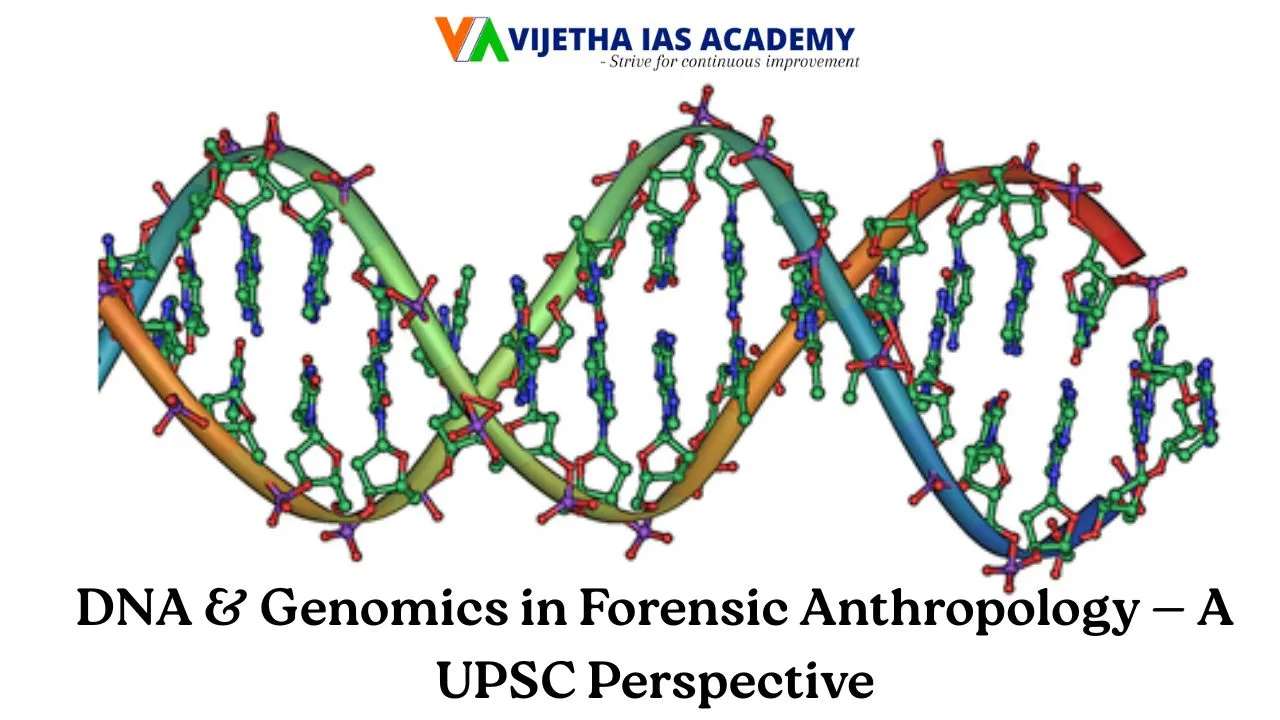
DNA & Genomics in Forensic Anthropology — A UPSC Perspective
Introduction
DNA & Genomics in Forensic Anthropology is an emerging and highly relevant topic for UPSC Anthropology Optional, especially in the context of modern scientific advancements. It bridges the gap between biological anthropology and forensic science, helping in identification of individuals, solving crimes, and understanding human evolution.
For UPSC aspirants, this topic is important not only for Paper I (Biological Anthropology) but also for adding value to answers with contemporary examples.
What is DNA in Forensic Anthropology?
DNA (Deoxyribonucleic Acid) is the genetic material present in all living organisms. In forensic anthropology, DNA is used to:
- Identify unknown human remains
- Establish biological relationships
- Solve criminal cases
- Assist in disaster victim identification
Understanding Genomics in Anthropology
Genomics refers to the study of the entire genetic material (genome) of an organism. In Anthropology, genomics helps in:
- Tracing human evolution
- Understanding migration patterns
- Studying genetic diversity
DNA & Genomics in Forensic Anthropology: Key Techniques
1. DNA Profiling (DNA Fingerprinting)
- Uses unique DNA patterns
- Helps in individual identification
2. PCR (Polymerase Chain Reaction)
- Amplifies small DNA samples
- Useful in degraded samples
3. Mitochondrial DNA Analysis
- Passed through maternal lineage
- Useful in old skeletal remains
4. Y-Chromosome Analysis
- Traces paternal lineage
Applications in Forensic Anthropology
✔ Identification of Human Remains
DNA helps identify skeletons in:
- Mass disasters
- War zones
- Missing person cases
✔ Criminal Investigations
Used to match suspects with evidence.
✔ Disaster Victim Identification (DVI)
Essential in earthquakes, floods, and plane crashes.
✔ Paternity and Kinship Testing
Establishes biological relationships.
Importance for UPSC Anthropology
DNA & Genomics in Forensic Anthropology is important because:
- Frequently asked in Paper I
- Helps in writing scientific and analytical answers
- Adds value with current examples
Read more: Anthropology Optional Coaching at Vijetha IAS Academy
Explore: Anthropology Optional Test Series 2026
Ethical Issues in DNA Research
- Privacy concerns
- Misuse of genetic data
- Consent and data protection
- Ethical handling of human remains
Challenges in Forensic DNA Analysis
- Degraded DNA samples
- Contamination risks
- High cost of technology
- Need for skilled experts
Answer Writing Tips for UPSC
- Start with definition of DNA
- Add diagram (DNA structure)
- Mention forensic applications
- Include examples (disaster identification)
- Conclude with ethical perspective
Conclusion
DNA & Genomics in Forensic Anthropology has revolutionised the field by providing accurate and scientific methods of identification. For UPSC aspirants, understanding this topic is essential for scoring high in Anthropology Optional, as it combines conceptual clarity with practical application.
With proper guidance from Vijetha IAS Academy, students can effectively integrate such topics into their answers and improve their overall score.
FAQs
Q1. What is the role of DNA in forensic anthropology?
DNA helps in identifying individuals and solving criminal cases.
Q2. What is genomics in anthropology?
It is the study of the complete genetic material to understand evolution and diversity.
Q3. Why is DNA analysis important in UPSC Anthropology?
It adds scientific value and helps in writing high-quality answers.
Q4. What are the main DNA techniques used?
DNA profiling, PCR, mitochondrial DNA analysis, and Y-chromosome analysis.
Q5. What are the challenges in DNA analysis?
Degraded samples, contamination, and high costs.