
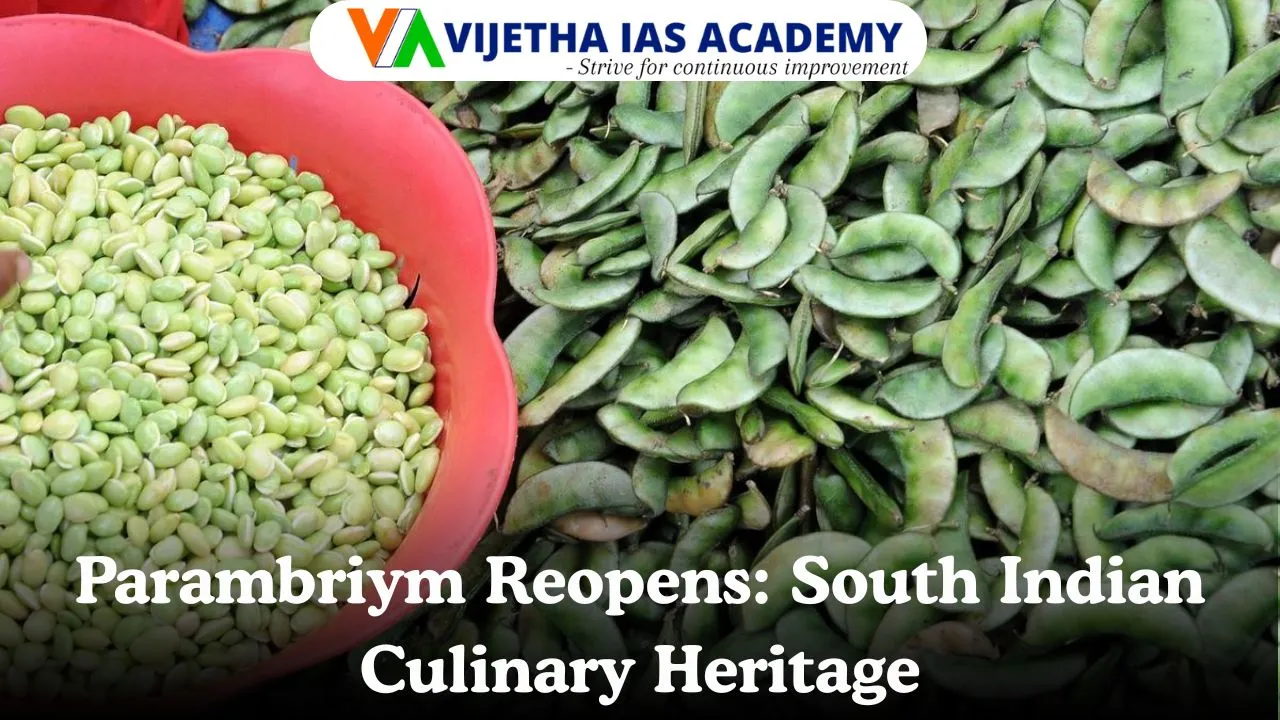
Maghi Sambhrama — Revival of Traditional Winter Food Cultures
Introduction
Seasonal food practices are deeply connected to climate, ecology, and traditional knowledge systems. In Anthropology, such practices are studied to understand how communities adapt to their environment. Maghi Sambhrama, a food and agriculture festival held in Mysuru, highlights the revival of traditional winter diets and indigenous crops of Karnataka.
What is Maghi Sambhrama?
Maghi Sambhrama is a two-day community-led festival, inaugurated on 13 December 2025 in Mysuru. Organised by Sahaja Samrudha and Sahaja Seeds, the event aims to reconnect urban populations with local agrobiodiversity, seasonal diets, and traditional farming practices.
Cultural Significance of ‘Maghi’
‘Maghi’ refers to the winter harvest period in South India. Traditionally, this season involved:
- Consumption of pulses, legumes, and tubers
- High-energy and protein-rich foods suitable for cold weather
This shows how food habits evolved in harmony with seasons and climate, a key anthropological insight.
Display of Traditional Winter Crops
The festival showcased crops such as:
- Avarekai (field beans)
- Cowpea, pigeon pea
- Groundnuts, tubers
- Desi maize and millets
These were sourced from regions like H.D. Kote, Periyapatna, Tumakuru, Dharwad, and Bengaluru Rural, reflecting regional agricultural diversity.
Indigenous Avarekai Varieties
Rare avarekai varieties like Chinugalu, Dabbe, Kempu, Mani, and Hittala were displayed.
These varieties, once common, are now unfamiliar to urban youth, pointing towards dietary homogenisation and cultural loss.
Traditional Nutrition and Health Knowledge
Dr. Shivaprasad Huded from JSS Ayurveda Medical College highlighted that:
- Pulses and legumes are ideal for winter metabolism
- They are protein-rich, affordable, and season-appropriate
This aligns with Ayurvedic Ritucharya, reinforcing indigenous health knowledge systems.
Farmer Livelihoods and Sustainability
Traditional crops:
- Require minimal chemical inputs
- Support mixed cropping systems
- Increase farmer resilience
Organic farmer Kalappa noted the shift towards commercial crops like tobacco and hybrid maize, leading to:
- Decline of food crops
- Dependence on market-based food
He advocated household-level cultivation for food security.
Culinary Heritage and Innovation
Traditional dishes served included:
- Avarekai uppittu, dosa, bath
- Mudde with avarekai sambar
- Jowar rotti from North Karnataka
This shows how traditional ingredients can be creatively adapted for modern consumption.
Conservation Beyond Food
- Rare rice varieties like uduru sali were displayed
- Gourd art exhibitions linked agriculture with folk creativity
This highlights the cultural dimension of farming beyond nutrition.
Anthropological Importance
- Seasonal festivals and food traditions
- Agrobiodiversity conservation
- Intergenerational knowledge transfer
- Sustainable farming models
- Climate-appropriate diets
Conclusion
Maghi Sambhrama is not just a food festival but a grassroots movement to revive seasonal diets, indigenous crops, and sustainable livelihoods. By integrating nutrition, culture, ecology, and farmer welfare, it offers a resilient model for future food systems, rooted in traditional wisdom.