
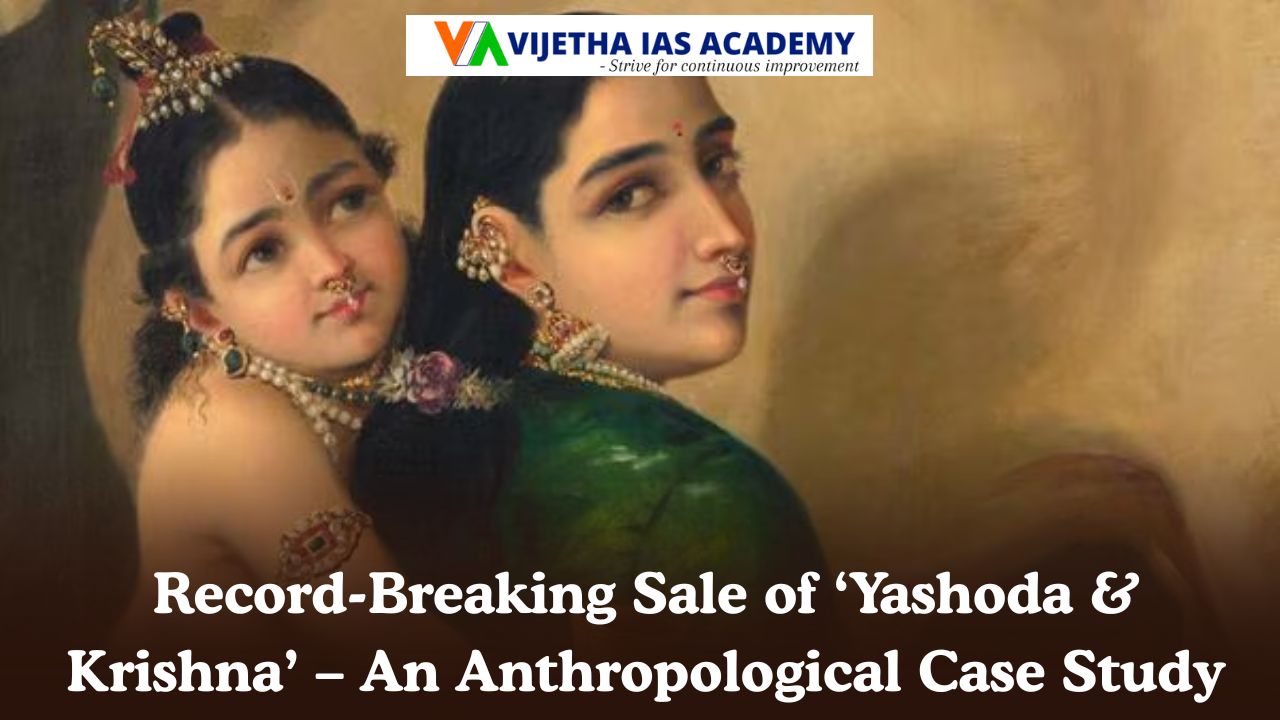
Record-Breaking Sale of ‘Yashoda & Krishna’ – An Anthropological Case Study
Introduction
The recent sale of ‘Yashoda & Krishna’ by Raja Ravi Varma for a record ₹167.2 crore marks a historic moment in India’s art and cultural landscape. The painting was purchased by Cyrus S. Poonawalla at a Saffronart auction, making it the most expensive modern Indian artwork ever sold.
This event is not just about economics—it reflects deeper issues related to culture, identity, accessibility, and heritage preservation, making it highly relevant for Anthropology.
Background of the Case
About Raja Ravi Varma
- Born in 1848 in Travancore
- Blended European realism with Indian themes
- Pioneer of lithographic printing (1894), which made art accessible to the masses
- Popularized Hindu mythological imagery, shaping Indian visual culture
About the Painting
- Created in the 1890s
- Depicts maternal love between Yashoda and infant Krishna
- One of Varma’s most iconic works
- Estimated value: ₹80–120 crore → Final sale: ₹167.2 crore
Key Stakeholders
- Private Collector: Cyrus Poonawalla
- Auction House: Saffronart
- Indian Art Market & Artists
- Government & Cultural Institutions (ASI, Ministry of Culture)
- General Public (as cultural stakeholders)
Key Anthropological Issues
1. Commercialization vs Cultural Heritage
- Art is increasingly treated as an investment asset
- Cultural objects moving into private hands may reduce public access
- Raises the question: Should heritage be owned privately?
2. Accessibility of Cultural Assets
- Public concern about whether such masterpieces remain accessible
- Positive note: Buyer has expressed intent for periodic public display
3. Preservation of Cultural Identity
- Varma’s paintings are deeply tied to religion and cultural consciousness
- Ownership of such works raises questions about:
- Cultural ownership
- Symbolic heritage
- National identity
4. Growth of Indian Art Market
- Indicates maturity of India’s art economy
- Rising global recognition of Indian art
- Increasing investor confidence in cultural industries
Ethical Dimensions
- Custodianship Responsibility:
Private collectors act as custodians of national heritage - Equity in Access:
Cultural assets should not become elitist - Cultural Nationalism vs Global Market:
Should heritage be commodified globally?
Significance of the Event
Economic Significance
- Boosts India’s creative economy
- Enhances global positioning of Indian art
Cultural Significance
- Reinforces relevance of mythological themes
- Reflects emotional and cultural connection with society
Institutional Significance
- Encourages investment in museums, galleries, and preservation efforts
Government Role & Policy Perspective
- Strengthening heritage protection laws
- Promoting public-private partnerships
- Incentivizing public exhibitions of private collections
- Developing national digital archives of art
Way Forward
- Public Display Mandates: Encourage exhibitions by private owners
- Art Funds & Endowments: Government-backed cultural investments
- Digital Democratization: Virtual museums for wider access
- Strengthening Institutions: National Museum, NGMA
- Cultural Education: Integrating art awareness in curriculum
Anthropological Insight
From a Social-Cultural Anthropology perspective, this case highlights how:
- Art acts as a cultural symbol and social memory
- Economic forces reshape cultural ownership patterns
- Heritage is not just material—it is deeply symbolic and collective
Conclusion
The record-breaking sale of Yashoda & Krishna is not merely a financial milestone but a reflection of India’s rich cultural heritage and its rising global stature. While it showcases the economic value of art, it also emphasizes the need to balance private ownership with public cultural responsibility, ensuring that such masterpieces remain accessible as part of shared national heritage.