
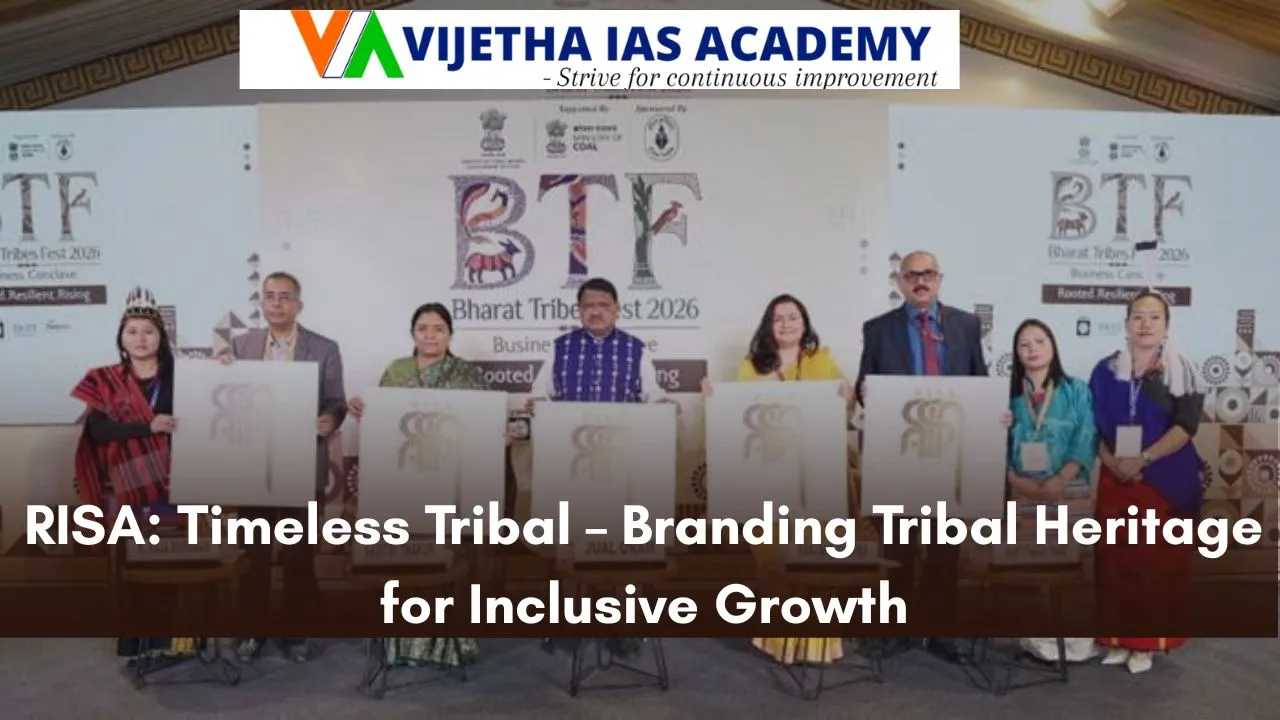
RISA: Timeless Tribal – Branding Tribal Heritage for Inclusive Growth
Introduction
India’s tribal communities have long been the custodians of rich cultural traditions, reflected in their unique textiles, handicrafts, and artistic expressions. However, despite their cultural wealth, these communities often remain economically marginalized due to limited market access and systemic exploitation. Recognising this gap, the Government of India launched “RISA: Timeless Tribal” on 18 March 2026 as a premium brand initiative aimed at integrating tribal heritage with modern markets while ensuring inclusive and sustainable development.
Background and Rationale
India’s tribal artisans possess exceptional craftsmanship, yet they face multiple structural challenges. These include lack of direct access to markets, low income realisation, minimal design innovation, and dependence on intermediaries. Additionally, many traditional crafts are declining due to changing consumer preferences and lack of institutional support.
At the same time, there is a growing global demand for sustainable, handmade, and culturally authentic products. The RISA initiative is designed to bridge this gap by connecting tribal artisans with premium domestic and international markets.
Key Features of the Initiative
1. Brand Identity
RISA derives its inspiration from the traditional “Risa” textile of Tripura, symbolising cultural identity and everyday utility. It is positioned as a premium lifestyle brand with pan-Indian relevance.
2. Coverage (Phase I)
- 10 clusters
- 5 tribal weaves
- 2 embroidery traditions
- 3 handicraft categories
3. Major Products Included
- Eri Silk (Assam – Bodo tribe)
- Muga Silk (Assam – Mising tribe)
- Changpa Pashmina (Ladakh)
- Kotpad Cotton (Odisha)
- Santal Cotton (Jharkhand)
- Toda and Dongria embroidery
- Dokhra art, Longpi pottery, Turtuk brassware
Institutional Framework
The initiative is implemented by the Ministry of Tribal Affairs with support from TRIFED, the National Institute of Design (NID), and the National Design Centre. It also involves collaboration with leading designers to enhance product appeal and global competitiveness.
Core Components
1. Design Intervention
Focus on blending traditional craftsmanship with modern aesthetics to create innovative and market-relevant products while reviving endangered art forms.
2. Capacity Building
Skill development programmes aim to enhance artisan capabilities, with a special emphasis on empowering tribal women and preparing artisans for premium markets.
3. Infrastructure Development
Establishment of weaving clusters and production units to improve efficiency and scalability.
4. Market and Branding Strategy
RISA adopts a premium positioning strategy, targeting high-value domestic and international markets with sustainable and eco-friendly products.
Objectives
- Preserve tribal cultural heritage
- Ensure fair and equitable profit-sharing
- Enhance income levels of artisans
- Promote self-reliance (Atmanirbhar Bharat)
- Create global recognition for tribal crafts
Socio-Economic Significance
Economic Impact
The initiative enhances income opportunities, reduces dependence on middlemen, and integrates artisans into global value chains.
Social Impact
It promotes women empowerment, strengthens community identity, and enhances the dignity of labour.
Cultural Impact
RISA contributes to the preservation and revival of intangible cultural heritage and traditional art forms.
Governance and Policy Linkages
The initiative aligns with major national and global frameworks such as:
- Atmanirbhar Bharat Mission
- Viksit Bharat Vision
- Tribal Sub-Plan
- Sustainable Development Goals (SDGs), especially poverty reduction, gender equality, and decent work
Challenges and Concerns
Despite its potential, the initiative faces certain challenges:
- Risk of losing authenticity due to commercialization
- Ensuring sustained demand in premium markets
- Dependence on designer-driven models
- Logistics issues in remote tribal areas
- Ensuring fair distribution of profits
Way Forward
To maximise its impact, the following steps are essential:
- Strengthening e-commerce and digital platforms
- Expanding the initiative across more regions
- Promoting GI tagging and intellectual property protection
- Encouraging youth participation in tribal crafts
- Developing export-oriented strategies
Conclusion
“RISA: Timeless Tribal” represents a transformative approach to development by combining cultural preservation with economic empowerment. By positioning tribal products in premium markets and ensuring fair participation of artisans, the initiative not only safeguards India’s heritage but also promotes inclusive growth. It stands as a powerful example of how cultural capital can drive sustainable development and social justice in modern India.