
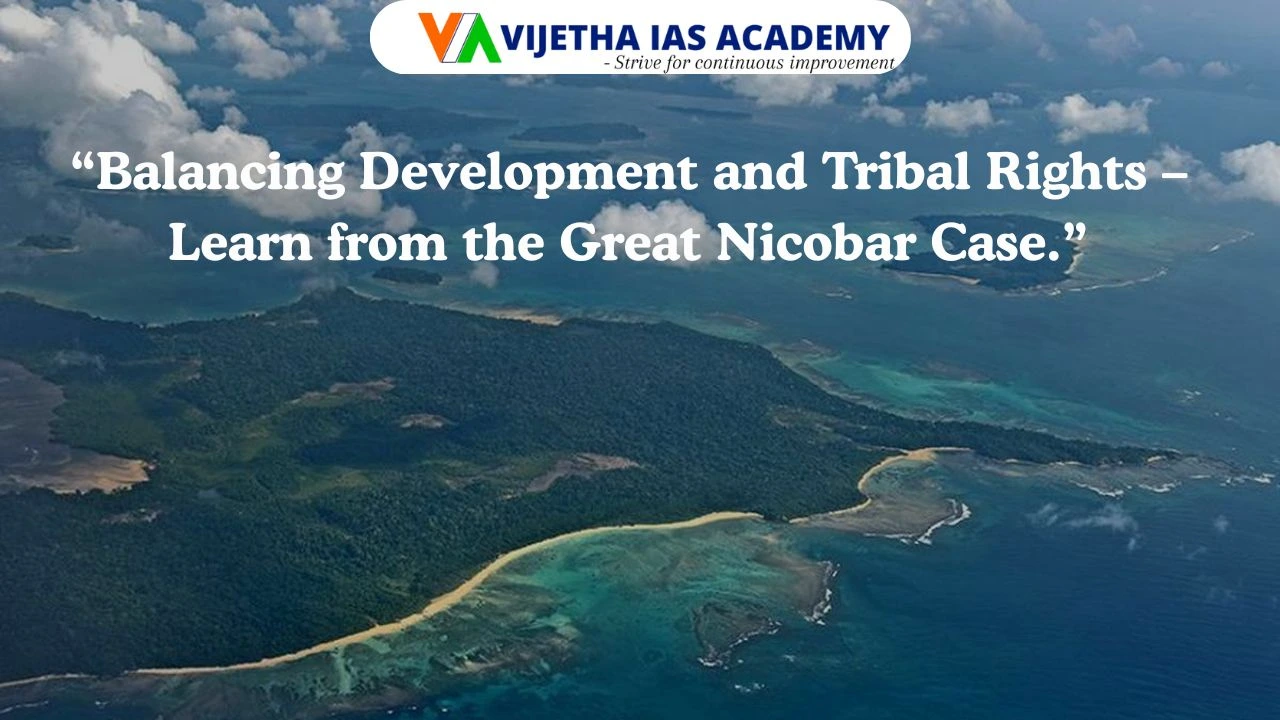
The Great Nicobar Island Project and Denotification of Tribal Reserves
Introduction
The Great Nicobar Island Project is one of India’s largest infrastructure projects, valued at nearly ₹92,000 crore. It includes the construction of a transhipment port, an international airport, a township, and a power plant on Great Nicobar Island. The project is being implemented by the Andaman and Nicobar Islands Integrated Development Corporation (ANIIDCO) and is considered strategically important for India’s maritime trade and security in the Indo-Pacific region.
However, this massive development plan has raised serious concerns about its impact on the island’s ecology and indigenous communities, especially the Shompen and Nicobarese tribes, who are among the most vulnerable and isolated groups in the world.
Administrative Developments
- Mapping Tribal Reserves:
The Administration has used Geographic Information System (GIS) mapping to identify areas for denotification and re-notification of tribal lands. These maps will determine where project-related infrastructure like communication towers will be built.
- Transit Infrastructure:
Transit accommodation for project staff has already been constructed, suggesting that ground preparations have begun even as some environmental and legal clearances remain pending.
- Monitoring Committee Oversight:
The ANIIDCO Monitoring Committee is overseeing whether tribal-protection norms are being followed during the project’s implementation.
Legal and Ethical Concerns
- Forest Rights Act (FRA), 2006:
According to the FRA, the rights of forest-dwelling tribes must be recognized before any land is taken for development. However, this process remains under dispute, with petitions filed in the Calcutta High Court questioning whether tribal consent was properly obtained.
- Tribal Opposition:
The Nicobarese Tribal Council has voiced strong opposition, arguing that their ancestral villages, abandoned after the 2004 tsunami, fall within the project zone. They say their habitation and forest rights have never been formally recognized.
Tribal Welfare and Representation
The Administration is drafting a Comprehensive Tribal Welfare Plan (CTWP) that aims to:
- Consider Nicobarese demands to return to their ancestral lands.
- Include data on pre-tsunami settlements.
- Offer provisions for housing, farmland, and employment.
However, the Tribal Council’s letter (August 2025) clarified that their main demand is road connectivity, not new housing or compensation. They have also made it clear that they do not consent to large-scale industrial development that could harm their environment.
Consultations are being planned with the Andaman Adim Janjati Vikas Samiti, representing the Shompen community, to ensure their views are included.
Research and Policy Actions
The government has approved new studies such as “Shompen Katha” to focus on the health, welfare, and protection of indigenous groups. Timelines have been set for integrating tribal welfare into the overall project framework.
Key Issues and Implications
- Balancing Development and Indigenous Rights:
The project raises the age-old question — how do we pursue national development without marginalizing indigenous people? Denotifying tribal lands challenges constitutional protections under Articles 244 and 275 and related tribal safeguard provisions.
- Environmental Concerns:
The island is part of a UNESCO Biosphere Reserve, home to unique flora and fauna. Large-scale construction could lead to deforestation and loss of biodiversity.
- Need for Transparent Governance:
Ongoing legal reviews highlight the importance of free, prior, and informed consent from tribal communities, as well as strict compliance with environmental and tribal protection laws.
Conclusion
The Great Nicobar Island Project symbolises India’s developmental ambitions, but it also reminds us of the delicate balance between progress, ecology, and human rights. True development should be inclusive, ethical, and environmentally sustainable, respecting the voices and rights of the island’s indigenous people.